How can governments address genuine security risks without making access to technology, trade and investment increasingly unpredictable? Five proposed standards for restraint.
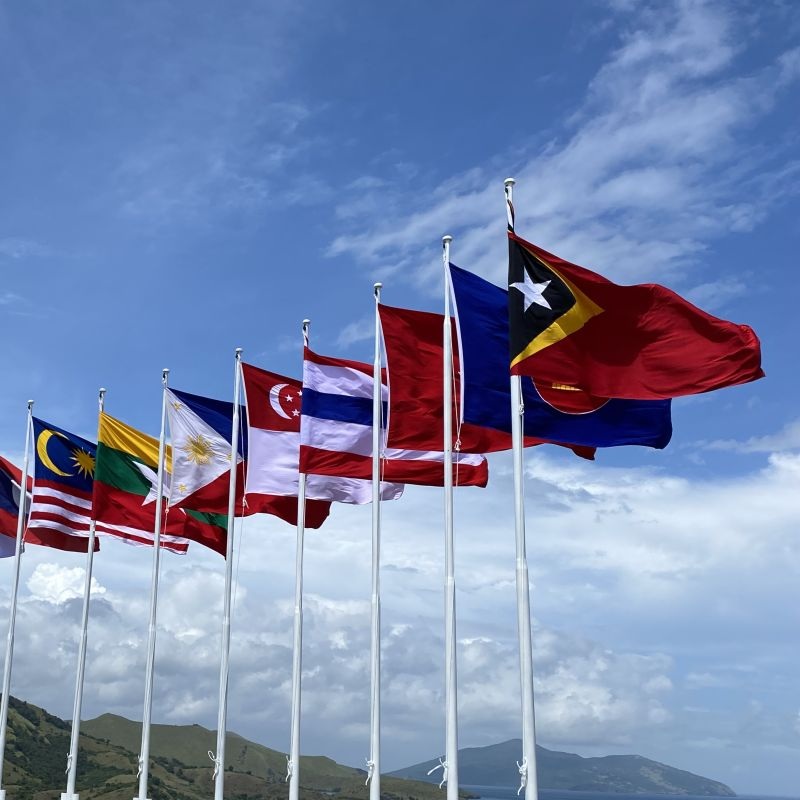
How can WTO accession support development in Timor-Leste? A World Bank report on reform, economic diversification and the work needed to turn commitments into results.
In early 2021, I was asked by The Commonwealth Secretariat (ComSec) an intergovernmental organization based in London, to write a research paper to document how much official development assistance (ODA) - aid…
The pandemic showed what regulators could achieve under political pressure. What would it take to bring that urgency to other medicines and treatments?
How to lose the race for technological pre-eminence This is a subject I started to think a lot about while working at Huawei Technologies in Shenzhen, which is here: As the attentive reader, will notice,…
Some research and advocacy on what governments can do to avoid undermining the benefits of the Fourth Industrial Revolution In late 2019 Hosuk Lee-Makiyama, who I had already cooperated on when writing the…
How can governments address genuine security risks without unnecessarily dismantling the global value chains and innovation networks on which our prosperity depends?
One of the first things I was asked to do when I joined Huawei was to draft, publish and disseminate an industry white paper on a - then - new set of trade rules being negotiated in different fora on trade…
Some research on overcoming infrastructure and institutional constraints in Indonesia This is a paper I co-authored with Michelle Limenta and Sianti Candra as I was serving as the Director of the Center for…
How could Taiwan respond to exclusion from the TPP? A December 2014 study of market access, domestic reform and the political constraints on regional integration.
A November 2014 study of Taiwan’s options beyond RCEP membership: bilateral agreements, competitive market access and the politics of regional integration.
My book chapter offerring some reflections prior to the 9th WTO Ministerial Conference on Bali This is a book chapter that I wrote for an edited volume commissioned by the World Trade Institute in Berne,…
How does Australia's antidumping system work in practice? My contribution to Kluwer's comparative guide examines investigations, duties and the balance between protection and competitiveness.
Simon Lacey and Pierre Sauve, December 2003 | Berne, Switzerland In 2013, about ten years after the above photo was taken, Pierre and I published a handbook on negotiating services liberalization in the…
Agreed Regulatory Principles and their Evolution This paper is one of four that I wrote while I was in residence at the Georgetown University Law Center's Institute of International Economic Law, then still…
Can competing rules of origin be reconciled when products are increasingly made across borders? An examination of the technical and political obstacles to common rules.
Two assignments in Pohnpei in 2010, an unsuccessful effort to encourage WTO accession, and lessons on building competitiveness in a small island nation spanning a vast territory.
When do imports cause injury, and when does the legal test make safeguards too difficult to use? An early paper on WTO trade remedies, later presented in Seoul.
One of my first papers at the World Trade Institute: India’s challenge to European antidumping practices and the limits trade rules placed on investigating authorities.